Gallery




©
Working Wave, All Right Reserved.
Nairobi, Kenya
"Embracing life's challenges with courage and determination"
Years Old
Derrick is a charming young man. He smiles easily, connects
warmly with people around him, and carries himself with a
quiet confidence that often surprises those who meet him for
the first time. He does not introduce himself through his
condition. He introduces himself simply as Derrick.
He is the second born in a family of five children, raised
by two parents who love him deeply. Although both parents
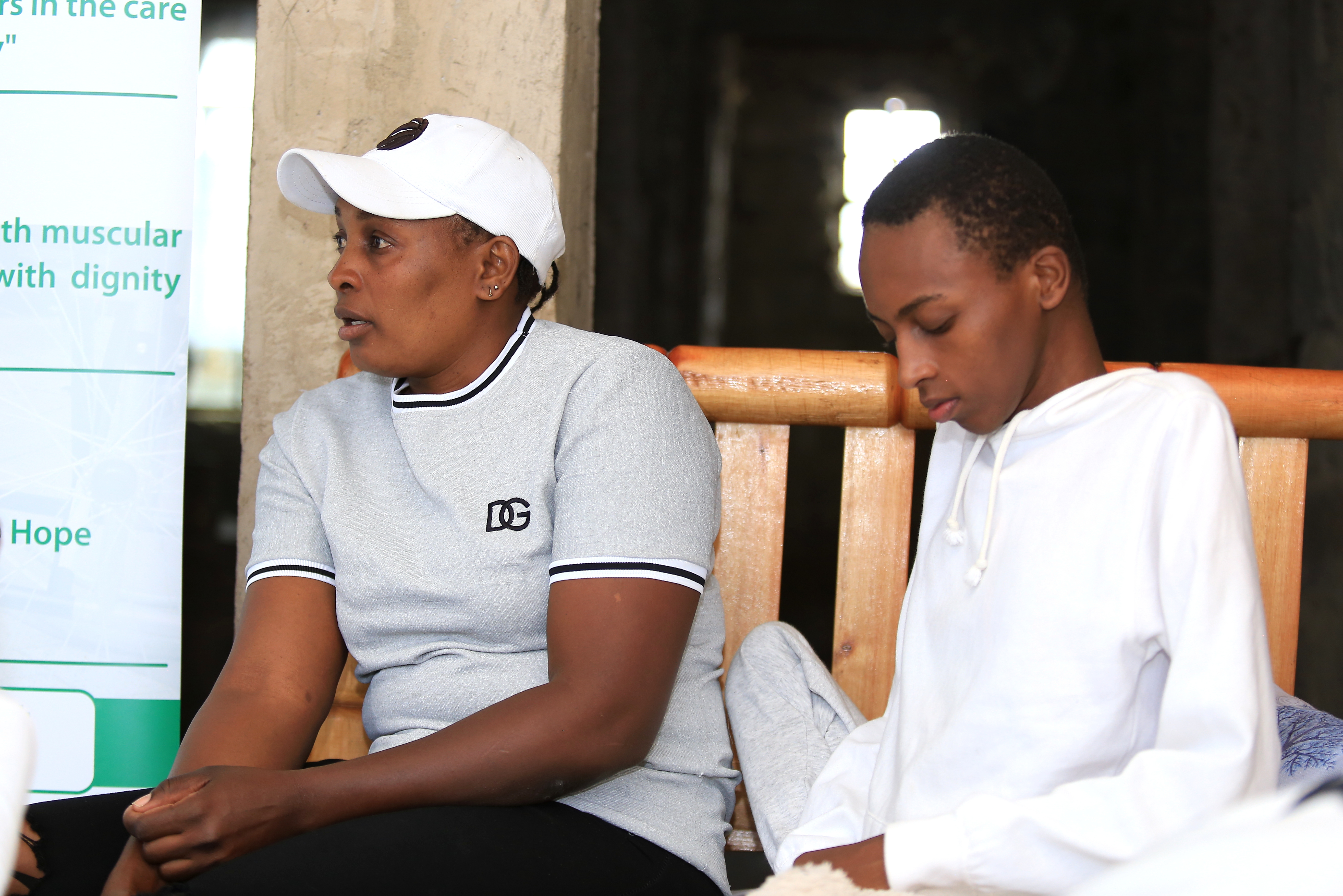
are present, his mother, Mary Wangari, is his primary
caregiver. On days when his father is not working, they
alternate care duties, sharing the physical and emotional
weight that comes with supporting a child whose needs have
grown over time. Derrick’s journey began long before there
was a name for what he was going through.
In 2014, when he was still young, his parents began noticing
changes. His legs were not as strong as other children’s. He
struggled to keep up physically. He needed support in ways
that did not feel typical. Concerned, they visited several
hospitals, searching for answers. None came. It was not
until they visited Kijabe Hospital that a doctor noticed
something different. After careful observation, Derrick was
diagnosed with Duchenne muscular dystrophy.
For Mary and her family, the diagnosis was both a shock and
a turning point. They had never heard of Duchenne before.
They did not understand what it meant or what the future
would look like. Wanting clarity, they sought second
opinions and visited more hospitals. Eventually, they
returned to Kijabe Hospital, where a biopsy was done and the
family was given more information about the condition and
how progressive it is.
It was difficult knowledge to absorb. Knowing that the
condition would worsen over time was not easy to accept.
Still, understanding brought a new kind of strength. It
allowed the family to begin adjusting, even as they grieved
the life they had imagined for their son.
For years, Derrick attended physiotherapy. His parents did
everything they could to help him maintain mobility and
comfort. Then in 2019, everything changed. Derrick became
fully dependent on a wheelchair.
Watching that transition was heartbreaking. His parents saw
the condition progress not in theory, but in daily life.
Today, Derrick depends on support for almost everything,
including personal hygiene. The level of care required is
intense, constant, and physically demanding. As he grows
older, caregiving becomes heavier, not because love has
reduced, but because the body grows and strength must be
supplemented with support.
Derrick is currently in school at Joytown Secondary School,
where he is surrounded by people who support him and
understand his needs. For Mary, this has been a source of
encouragement. Knowing that her son is in an environment
where he is accepted and assisted gives her the strength to
keep going.
Yet the challenges remain.
Physiotherapy has become increasingly difficult to access.
In some places they visited, they were turned away and told
that therapy would not change anything. Hearing this was
painful. Even when cure is not possible, comfort matters.
Dignity matters. Quality of life matters.
Financial strain is constant. School fees and medical
support, especially physiotherapy, are heavy burdens for the
family. Every decision must be weighed carefully, balancing
care for Derrick with the needs of the rest of the children.
Like many families, they also faced confusion in the early
days. At one point, they wondered if Derrick’s condition
could be something traditional or spiritual. They sought
counsel from elders, searching for meaning and answers.
Eventually, they came to understand that this was not a
curse or a mistake. It was a medical condition. And
accepting that truth was part of the journey. Mary does not
pretend that the road has been easy. Caring for a 16 year
old who is fully dependent takes emotional resilience,
physical strength, and faith. Some days are harder than
others. Still, she remains grateful. She thanks God for
Derrick’s life, for the support they do have, and for the
strength to face each day as it comes.
Her message to other families living with Duchenne is honest
and compassionate. The journey is hard, especially for
caregivers. Communities need to be sensitised so that stigma
is reduced and understanding grows. Awareness changes how
families are treated, how children are supported, and how
caregivers are seen.
Derrick may live with Duchenne, but he does not define
himself by it. He is a young man with personality, presence,
and worth. His life matters, not because of what he can or
cannot do, but because he is here.
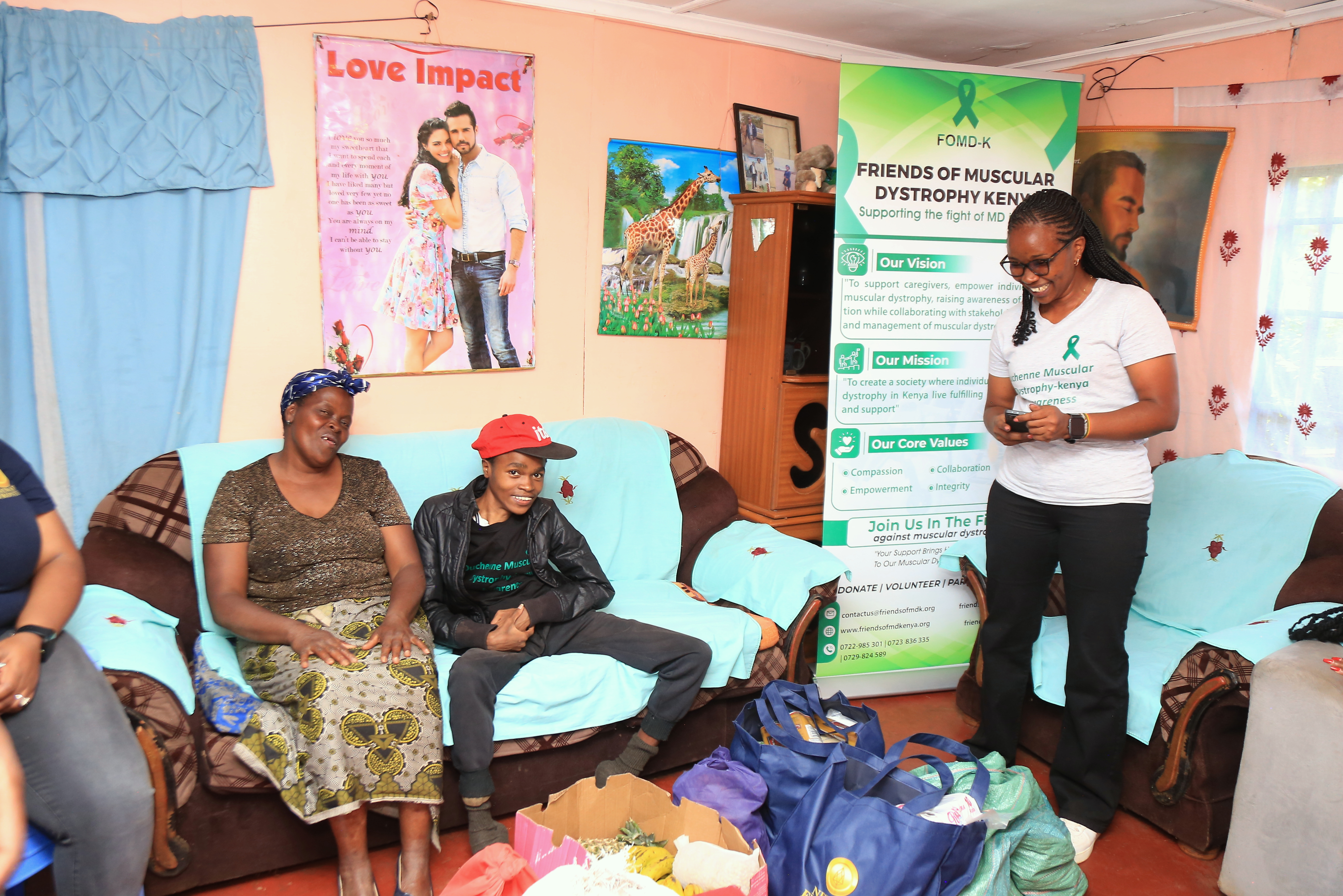
At Friends of Muscular Dystrophy Kenya, stories like
Derrick’s remind us that Duchenne is not just a medical
condition. It is a family journey. One that requires care,
awareness, and community.
And when families are supported, when caregivers are seen,
and when children like Derrick are accepted fully, the
journey becomes lighter. This is Derrick’s story.