Gallery




©
Working Wave, All Right Reserved.
Nairobi, Kenya
"Embracing life's challenges with courage and determination"
Years Old
Jeremy is 11 years old. He is gentle, observant, and
thoughtful in ways that often go unnoticed. From the
outside, his body still looks strong. His posture is
upright. His limbs appear capable. And that is exactly why
his struggle has been so misunderstood.
When Jeremy began falling frequently, his mother, Zilpha
Waloe, knew something was wrong. At first, it looked like
clumsiness. A stumble here. A fall there. But the falls kept
happening, and a mother’s worry does not fade with
repetition.
Zilpha took Jeremy to the University of Nairobi Health
Services clinic after several falls. The doctor listened
carefully and referred them to see a neurologist. That
referral would change their lives.
They were asked to do blood tests to check Jeremy’s creatine
kinase levels. When the results came back, the number was
alarming. Jeremy’s CK levels were at 7,000, far higher than
normal. From there, they were referred to MP Shah Hospital
for further testing.
It was there, after neuromuscular tests and consultations,
that the diagnosis came. Duchenne muscular dystrophy.
For Zilpha, it was a moment that split life into before and
after. She learned that Duchenne is progressive. That there
is no permanent cure. That her son’s muscles would slowly
weaken over time. She learned words she never wanted to
know. Progression. Inflammation. Management. Slowing down
what cannot be stopped.
They were given medication to help reduce inflammation and
slow progression. They were advised to start physiotherapy
to manage pain and preserve mobility for as long as
possible. And just like that, Zilpha became more than a
mother. She became a full time caregiver, advocate,
protector, and planner of a future filled with uncertainty.
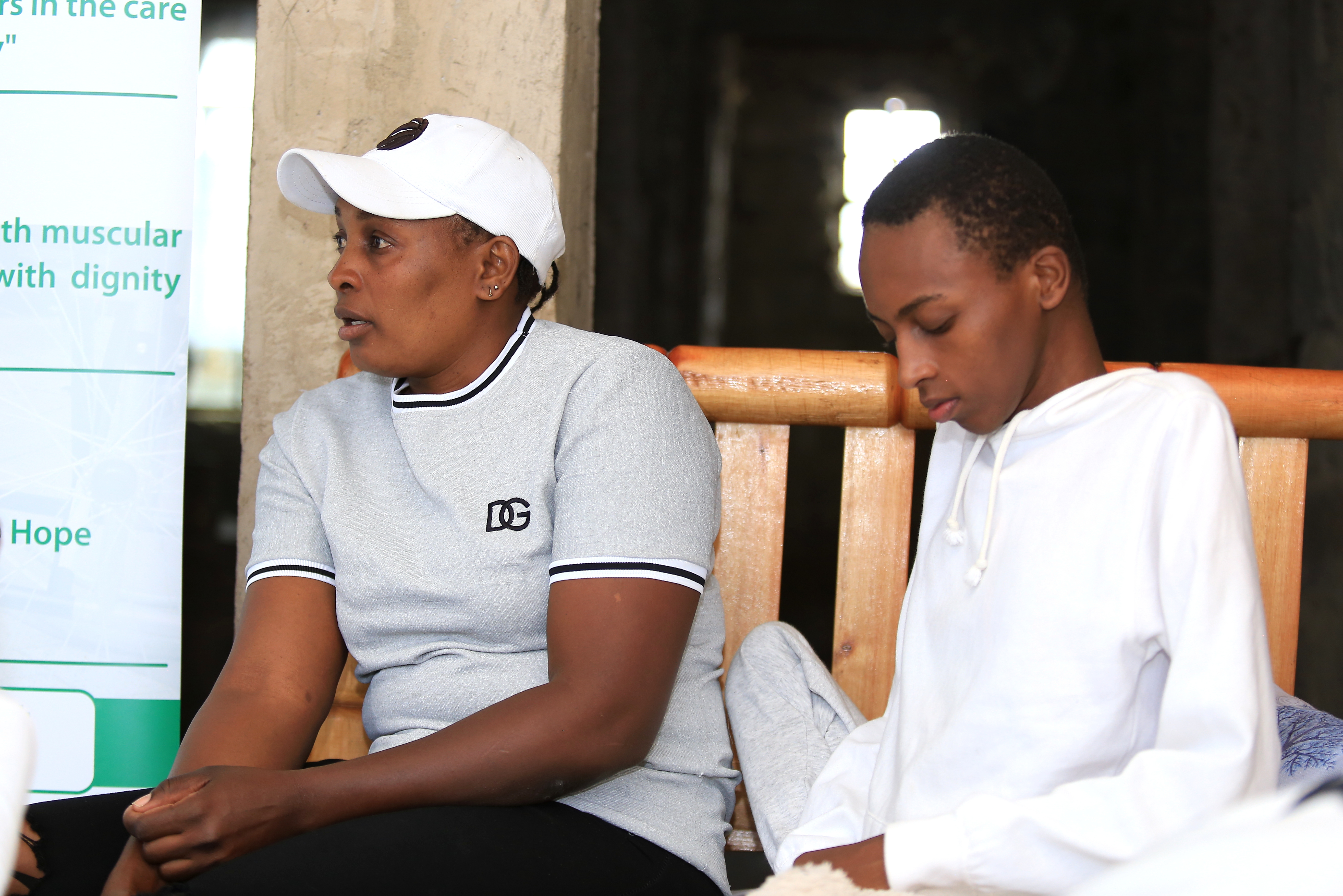
Zilpha is the sole caregiver in her home. She has another
child to care for. She works at the library department at
the University of Nairobi, balancing employment with
hospital visits, therapy appointments, and the emotional
weight of watching her child navigate a condition the world
barely understands.
The challenges have been many.
Medication for Jeremy is expensive and ongoing. Therapy
costs add up quickly. Mobility is difficult because the area
where they live does not have smooth terrain, making
movement physically demanding and unsafe. Transportation is
a daily fear. They rely on public transport, crossing busy
roads, and every trip comes with a quiet prayer that Jeremy
will not fall in the middle of traffic. But some of the
hardest challenges have not been medical.
Because Jeremy still looks physically strong, people assume
he is slow by choice. Lazy. Unmotivated. Uncooperative.
Words that cut deeply when spoken about a child who is
already trying his best just to keep up. xactly why his
struggle has been so misunderstood.
These assumptions have taken a mental toll on Zilpha. They
have also affected Jeremy. There are days he chooses not to
play. Days he pulls back from his social circle. Days when
being misunderstood feels heavier than the condition itself.
Yet, in the middle of all this, there is light.
Jeremy’s school has become a place of support and
understanding. Teachers and classmates help him move around.
They are intentional about creating an inclusive learning
environment that allows Jeremy to focus on learning without
constantly worrying about his physical limitations. For
Zilpha, this support has been a reminder that inclusion is
possible when people choose to learn and care.
Inclusion, she believes, starts with understanding.
Communities need to learn more about Duchenne and other
conditions before forming opinions. Perception without
knowledge hurts families. It isolates children. It adds
unnecessary emotional weight to an already difficult
journey. Educators, she says, must look beyond academic
performance. Learners need to be seen emotionally and
physically, not just intellectually.
A child may be quiet because they are tired. Slow because
they are in pain. Withdrawn because they are protecting
themselves from judgment. Zilpha has chosen to turn her pain
into purpose. She is now one of the voices advocating for
Duchenne awareness, helping others understand what families
like hers face every day. She speaks so that other children
are not labeled before they are understood. So that other
mothers do not have to explain themselves over and over
again.
Jeremy’s story is not about weakness. It is about resilience
in silence. About a child navigating a world that often
moves too fast. About a mother doing everything she can to
protect her son’s dignity while carrying more than most
people will ever see.
There are many families like Zilpha and Jeremy. Families
managing medication, mobility challenges, financial strain,
and emotional isolation. Families who do not need pity, but
understanding. Not assumptions, but awareness. Not silence,
but community.
When we choose to learn, to listen, and to stand with
families living with Duchenne, something shifts. Children
are seen. Caregivers are supported. And the journey becomes
a little less lonely. Jeremy is still a child. He still
deserves to belong, to play, to learn, and to move through
the world with dignity. And with the right support,
understanding, and community, that future becomes possible.